Swipe to begin →
Whether shnorrer or millionaire, tailor or psychiatrist, shadchan or shopkeeper — Jewish humour about work captures the eternal art of getting by, getting ahead, and never letting anyone teach you how to run your own line of business.
Swipe to begin →
The shnorrer returns to his shtetl from London. "How was the trip?" his friends eagerly ask. "I went on a guided tour of Baron Rothschild's mansion." His friends are amazed, "What riches did you see?" "Riches – shmiches. I didn't notice much wealth." "What do you mean? Rothschild is one of the richest men in the world." "Say what you like but I know that this cannot be so. I saw two girls playing on the same piano with my own eyes."
A Jewish shnorrer knocks on the door of Rothschild's home. A servant asks, "What can I do for you?" "I wish to discuss a business matter with the Baron but in private." Nothing deters the shnorrer from insisting that the meeting must be in private. Just then, the Baron himself happens to pass by, hears the exchange, and asks the stranger what he seeks. "I want to request a gift." "Why all the fuss? Why do you need to see me on my own? You could have spoken about it with my secretary." "Listen Mr Rothschild, you may be a big businessman, but there is no way you can teach me how to run my own line of business."
Two Jewish shnorrers approach Rothschild's mansion. One says, "You go first and try your luck. Then, I'll have my turn." He knocks on the door and is asked by a servant what he requires. "I've come about a donation." He is sent to a secretary who gives him a note and directs him to another secretary who reads the note, annotates it and sends him to an obviously more senior official who tells him in no uncertain terms that he must leave the house immediately. When he emerges, his friend is more than curious, "Well, did the Baron give you a donation?" "Not a cent, but such an orderly business, especially the staffing arrangements, I have never ever seen. We could learn a lot from him on how we can improve our business."
It's not a shame to be poor — but that's the only good thing you can say about it. (Fiddler on the Roof)
Max Bushinsky, a widower, is on his death bed, all his children around him. The atmosphere is tense. The founder of a business which has turned him into a wealthy man, has made no mention of a will. Eventually, his oldest son, Hymie, musters up the courage and asks, "Dad, what about the business?" "That's all taken care of." The children look at one another puzzlingly. "You can be sure I'm not leaving the business to any of you, what with the mess you have made of your lives." Hymie again steels himself, "Then what will you do with it?" Mr Bushinsky props himself up, "Where's my favourite grandson?" Shmulik, a four-year-old, is quickly summoned from the garden. "Ah, Shmulik, you with your wonderful business brain, come to Zaida. Listen carefully. What's 4 and 4?" "It all depends on the state of the stock market, Zaida; are you buying or selling?"
Hillel, a 75-year-old retired businessman, approaches a busy intersection. With his poor eyesight, he fails to notice that the traffic light has changed to red. A horrific smash results. The ambulance arrives, and the paramedics attend to the seriously injured Hillel. Placing a pillow under his head, they ask him, "Are you comfortable?" He replies groggily, "Well, I've got a block of flats, two warehouses and, with my other investments, I make a comfortable living."
Two Jewish beggars are sitting on a park bench in Warsaw, one holding a cross, the other a Star of David. Both are holding hats to collect any donations. People walk by, lift their noses at the beggar with the Star of David, but drop coins in the hat held by the man with the cross. A priest observing the scene turns to the man with the Star of David, "Don't you realise that Poland is a Catholic country? You'll never get a donation by displaying a Star of David." Hearing this advice, he turns to his colleague, "Can you imagine, Henry — this priest is telling us how to run our business."
A Rabbi happens to be standing at the front entrance of his synagogue when he sees a familiar face. It dawns on him where he has seen the man. The Rabbi rushes down the stairs and grabs him. "Swindler! Thief!" the Rabbi bellows. "Only yesterday I saw you begging at the Cathedral. Today, you're begging at our synagogue. What are you, Catholic or Jew?" "A Jew — but in these hard times, I have had to diversify my business."
A patient meets his psychiatrist for the first time. "Well Mr Goldberg, you've got 50 minutes. It's your time. You can tell me whatever you like, or you don't have to say anything at all; it's up to you." Nothing happens, all is quiet. Exactly 50 minutes later, the psychiatrist says, "Mr Goldberg that's it, please see my secretary who will give you the bill and arrange another appointment." The next week, Mr Goldberg hears the psychiatrist state, "You have 50 minutes. It's your time. Please feel free to share anything that comes into your mind, anything at all. If not, that's fine too." Fifty minutes pass — not a sound. Again, pay the bill and another appointment. After the fourth session, when the psychiatrist sums up as usual, Mr Goldberg leans over the desk and inquires, "Doctor, perhaps you need a partner?"
Outside the Salvation Army a sign declares "Jesus Saves". Below it someone has scrawled, "Moses invests."
A Jewish businessman submits a claim from his insurance company following a disastrous fire at his factory. The agent helpfully points out, "You're covered for fire but not for storm damage. Why not extend your future policy?" "Storm damage?" queries the businessman, "how do you start a storm?"
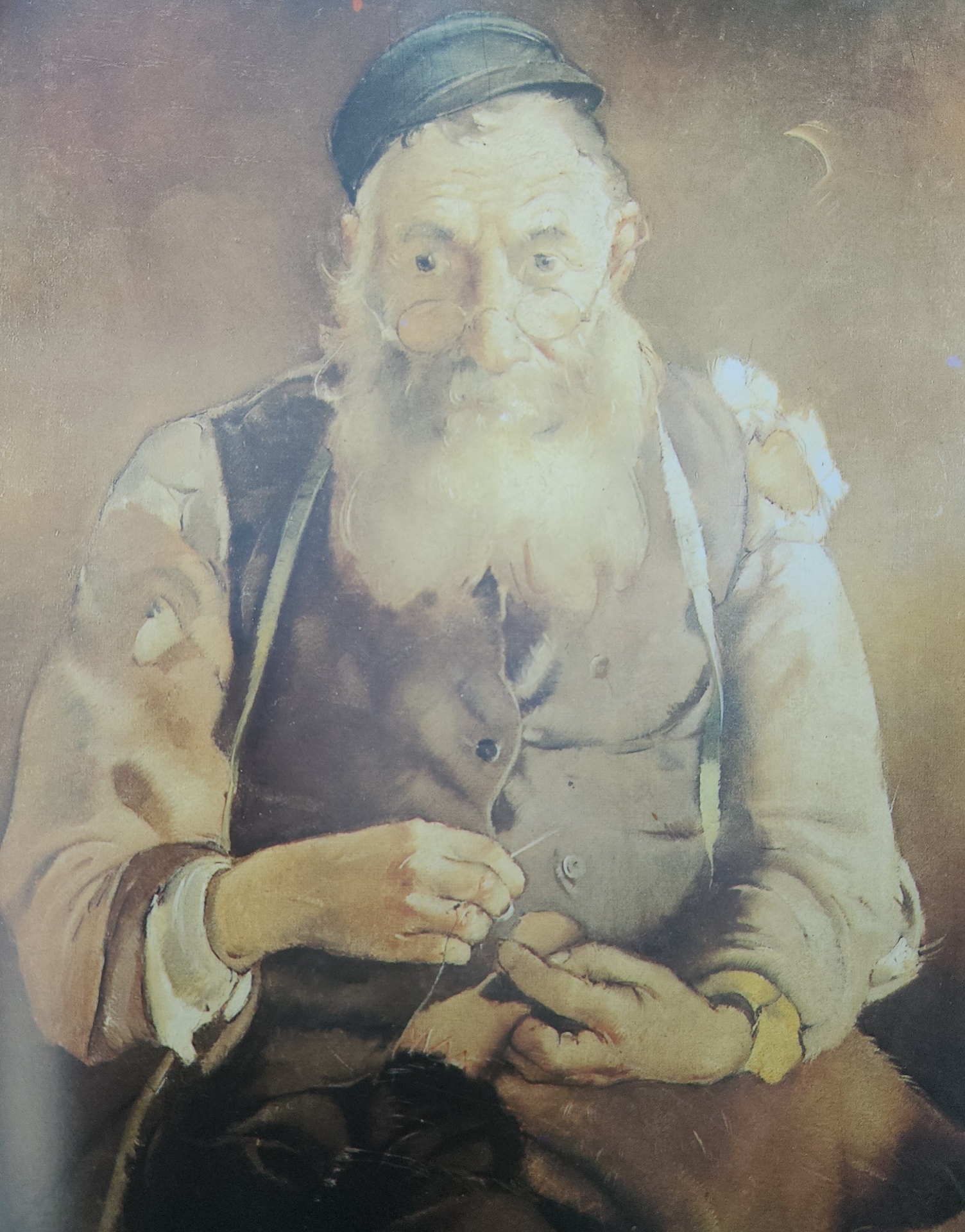
Zalman Greenberg, the tailor, puts up a sign in his shop: "My name is Greenberg. What do you think. I make suits for nothing." A passer-by, noting the sign, enters the shop and requests a suit of the finest quality. "Are you sure? Do you realize how much such a suit will cost?" "What, me worry?" replies the customer, "you make suits for nothing." "For nothing?" queries the tailor. "Look at your sign." "Oh that — you are reading it wrong. It says: 'My name is Greenberg. What do you think? I make suits for nothing?'"
Mr Slonim, a widower, bumps into the shadchan who recently matched him up with Yudes Greenspan, an elderly widow. "Nu?" asks the shadchan, "What do you think?" "What do I think? You didn't tell me about her limp!" "Only when she walks."
A shadchan has agreed to teach a novice about how to go about the job. In the very first lesson, the veteran stresses, "Bear in mind that we may exaggerate a little about the girl and her family." On the next occasion when they meet with the master of the house to confer about a possible match for his son, the shadchan naturally emphasises the girl's qualities. "You must know that she is from a lovely family." Adds the student, "What do you mean a lovely family — a distinguished family." "And they are rich." "What do you mean rich? They are millionaires." "And the girl is pretty," contributes the shadchan. "Never mind pretty — she is a real beauty." After a pause, the shadchan adds, "She only has one flaw but it is barely noticeable — a very tiny hunchback." Interjects the student, "What do you mean a tiny hunchback? It's the size of a spectacular mountain."
Two Jewish businessmen accidentally bump into each other. "How was your fire?" "Ssh!" whispers Mendel, "It's not until the end of the month."
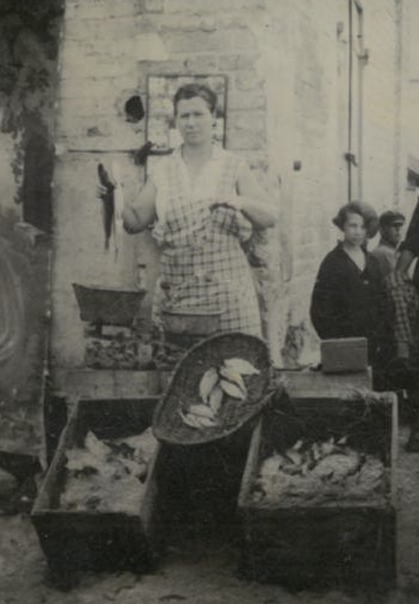
A shnorrer approaches a wealthy businessman, "Have pity on a poor cobbler whose family is starving." "Didn't you come to me last month presenting yourself as a carpenter?" queries the businessman. "It's true, but in my line of business one has no choice but to branch out."
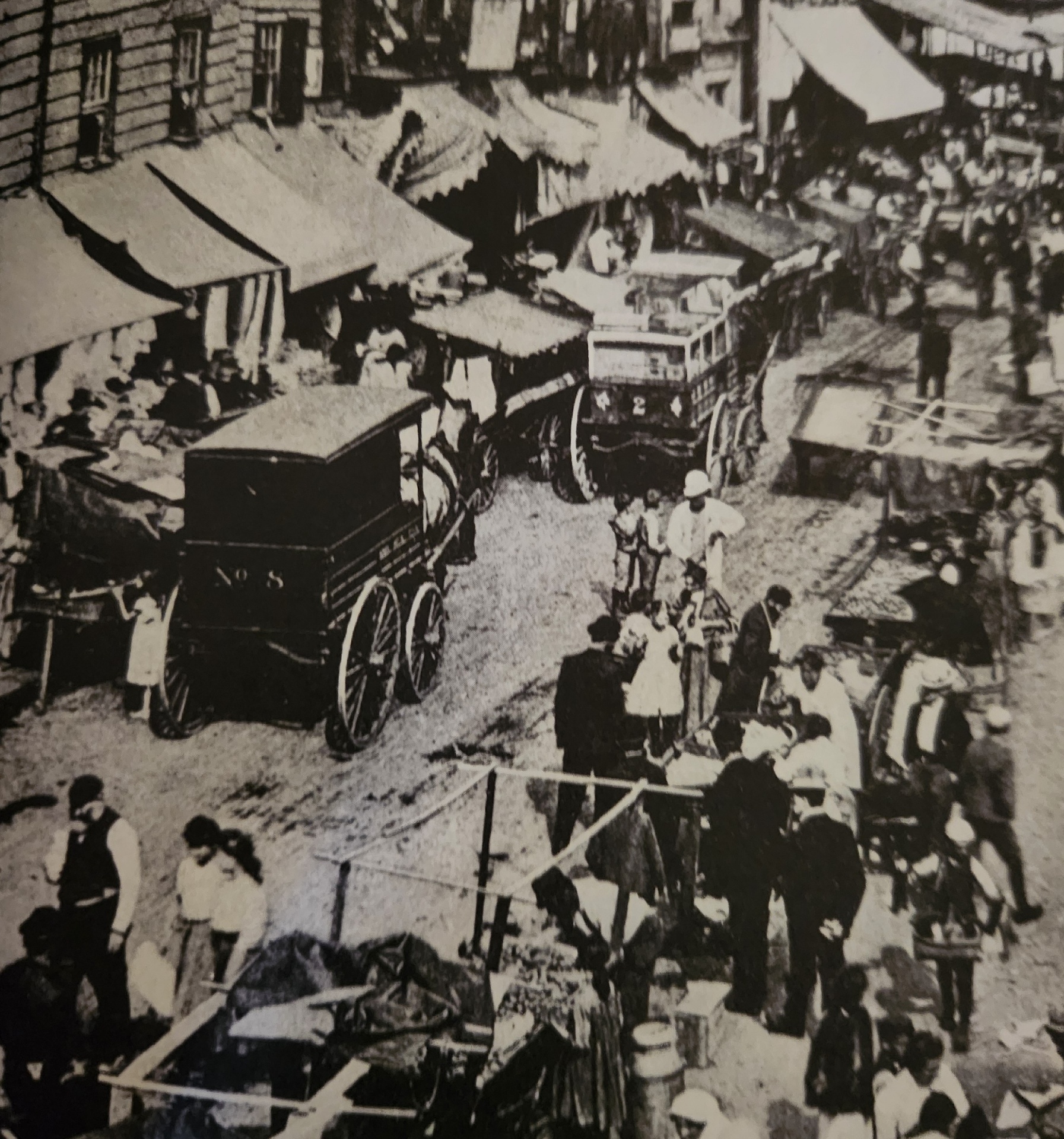
Mottel and Nathan are partners in a business selling religious articles in a Jewish suburb. Their troubles begin when most of their customers move to new suburbs and the Italians take their place. "Mottel, we have no choice but to move the business to the new Jewish area." "I've got a better idea; let's sell Catholic articles as well." "What? Have you gone mad, Mottel? We have a Jewish store." A month passes and they have sold virtually nothing. They agree reluctantly that they have no alternative but to stock both Jewish and Catholic articles. "OK, call the Catholic wholesaler and put in an order." "Hello, this is Mottel's and Nathan's religious store. I want to order 200 hymn books, 100 pictures of the Pope, 200 of those beads, what do you call them, rosaries? And a gross of crucifixes." "OK. I have your order. Let me read it back to you. 200 hymn books, 100 pictures of the Pope, 200 sets of rosaries and a gross of crucifixes." "When can you deliver?" asks Mottel. "It will have to be Monday; we don't deliver on Shabbes."
1 / 17 — swipe or use ← → to navigate