Why am I so attached to Jewish humour?
by Professor Sidney Bloch

A retired academic psychiatrist compiling a volume of Jewish jokes? A little bizarre, I hear you say. So perhaps I should explain why I have gone to the trouble, over several years, to collect dozens of jokes.
First and foremost, what I have regarded as a pastime has proved no bother at all; on the contrary, it has been a source of boundless pleasure. When I first stumbled on the idea, I had no inkling about how to proceed. Then, as if by divine inspiration, a strategy popped into my head quite unexpectedly. During the course of my professional career, I had the opportunity to work in, or visit, mental health centres in many countries, and consequently met an incredible range of lively people. Virtually all regarded humour as a quintessential dimension of their lives. Moreover, many encounters were with fellow Jews who loved Jewish humour in particular.
So, how did my strategy crystallize? On arriving in diverse towns like Hong Kong, Vancouver, New York, London, Jerusalem, Oxford, Sydney, and my birthplace Cape Town, I immediately sought out Jewish raconteurs with the help of my hosts, who were only too pleased to share their favourite stories and jokes. I was not disappointed. I discovered that Jewish communities invariably included people who thrived on humour. I also grabbed the opportunity to seek out Rabbis who were acknowledged by the local community as superb humourists, especially able to weave all sorts of witty jokes and stories into their sermons.
A second factor that contributed to my strategy was rather morbid, one might say even macabre. In the 1990s a spate of deaths occurred in the Melbourne Jewish community of the very people I have been talking about. When one of funniest collapsed and died in the midst of a talk at a Jewish function (we may well agree this was an enviable way to go!), it struck me that we were on the verge of losing a vital cultural tradition. In effect, I was witnessing the deaths of people who had been remarkably effective in bringing the spirit of our ancestors to life. A rich repository of wit and wisdom was at risk, possibly permanently.
I dashed off to the internet to check whether my concerns were justified. Then, I began to chase down publications, which might embody the stories, jokes, and sayings I feared I was hearing in their authentic form for the last time. The material I identified was disappointing on the whole; I could only locate an occasional sparkling Jewish joke. The death of the Melbourne humourist "in full flight" settled the matter for me. I resolved to save what I had cherished since childhood as an integral feature of my Jewish identity.
The third motivating factor relates to my "saviour" fantasy. Humour is indisputably an ubiquitous feature of the Jewish experience. Jewish life devoid of humour is unimaginable. Let me illustrate by drawing on my own upbringing. I grew up in a small, cohesive Jewish community in Cape Town. Most families had immigrated from impoverished and antisemitic Lithuania. Odd in some ways since we fell into a lion's den. We could not have chosen a more unjust society. We were immersed into the abhorrent ideology of apartheid; racism impinged every day and in all sorts of ways. What an irony given that we were wrestling continually with the aftermath of the Holocaust in which 90% of Lithuanian Jewry were murdered.
Notwithstanding, the Jewish community was vibrant and buoyant. Humour hailing from our heritage was a central aspect of our lives. We experienced it in all domains — family, religion, work, Jewish community, and in our relations with the non-Jewish world. Not surprisingly, I have used these five categories in the compilation. A commonly posed question was: "Have you heard the one about ...?" There seemed to be an infinite source of witty jokes to suit every occasion.
Two examples spring to mind.
I sang in a synagogue choir full of boisterous boys. The congregation relished our singing. No surprise there. We loved contributing to the services, and we took the task seriously. We also had loads of fun during rehearsals. Our incessant giggling and laughter exasperated the choir master and tested the patience of the cantor. Fortunately, both men, I hope, accepted that "boys will be boys" and that our liveliness encompassed the very Jewish qualities they themselves had probably known when they were youngsters.
Habonim, a Jewish youth organization, was a moral refuge, protecting us from the horrors of racism. The "movement," as we fondly called it, became a spiritual home (complementing the synagogue) in which we fulfilled our Jewish aspirations. We drew on the vitality of our parents and grandparents and added to it. Humour figured prominently. During summer and winter "camps", and at all events between, the wit flowed. We developed a penchant for creating humour with a Jewish flavour at every opportunity. We wrote and performed "skits" as a vehicle to poke fun at others and at ourselves.
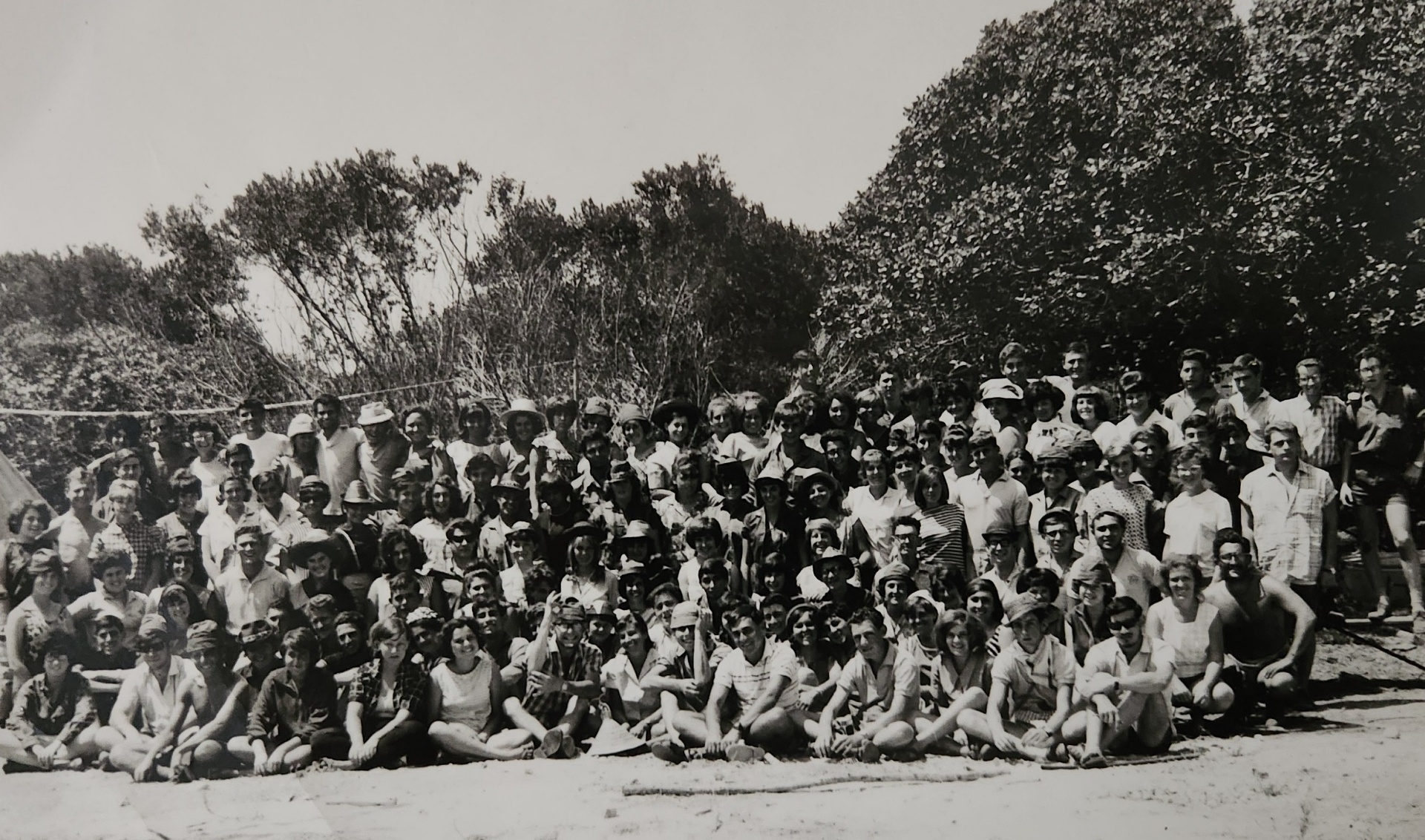
A central goal of the movement was to live full Jewish lives in Israel. I could not wait to get out of racist South Africa, and "escaped" a week after graduating as a doctor. The humour we had appreciated while growing up differed to that we encountered in Israel. Our type of wit was an obvious continuation of that originating in Lithuania. We also came to appreciate that Israel was developing its own brand of humour — predominantly satirical and bound up with the vagaries of contemporary politics.
A necessary digression
Although my appreciation of Jewish humour did not dim at any stage, it receded somewhat when I embarked on a career in psychiatry. In my early years of training, I had not dwelt much on the question of whether humour had a place in restoring mental health. My mentors gave me minimal guidance. I gained the impression that treating mentally ill people was a serious undertaking; humour had little, if any, role to play.
The revelation that it might be pertinent came from an unlikely source. While training in Stanford University in the 1970s, I was privileged to observe a group of women, all with advanced breast cancer, who were grappling with profound existential issues — impending death, loss of loved ones, and what had given their life meaning. I had anticipated a solemn, even lugubrious, atmosphere. How exhilarated I was to discover that the women were facing death in a spiritually uplifting way which included sharing amusing and pleasurable memories.
It dawned upon me then that we could delve into scary spheres of our lives through humour and come out enriched. However, the question arose whether we should weave humour into treatment. Could it not backfire? It seemed a risky prospect. A contribution to the debate by Lawrence Kubie, a leading American psychiatrist, made me and my fellow trainees even more insecure. He argued trenchantly that humour had no place in our clinical encounters and could be harmful. A flurry of letters followed Kubie's publication. Their authors argued to the contrary; the benefits of applying humour outweighed any risks, but with the caveat that it was done sensitively and empathically.
The exchange prompted me to explore the potential role of humour in psychiatric practice. The inquiry turned out to be most revealing. After ascertaining the attitudes of 50 colleagues to the "use and abuse" of humour in their work, the consensus emerged that it had a number of functions, and that these could be studied. Their conclusion? Treatment devoid of humour short-changed patients.
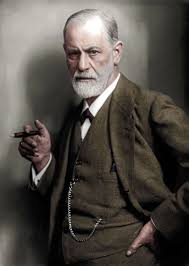
I was aware, while pondering over these issues, that Sigmund Freud had been intrigued by the significance of humour in psychological life and was particularly fond of Jewish jokes. But I had not studied his classic, Jokes and their relationship to the unconscious, or his later essay entitled Humour. I learned that he had a deep scholarly interest in the subject. He regarded humour as a form of protection against distressing emotions. Moreover, it had a liberating quality. He elevated it to a mature form of coping. As he put it, humour has a place among the "great ... methods which the human mind has constructed in order to evade the compulsion to suffer." Moreover, this occurred without "overstepping the bounds of mental health." He put it even more explicitly, "Look! Here is the world, which seems so dangerous! It is nothing but a game for children — just worth making a jest about!"
Other contributors to the study of humour have also regarded it as a sophisticated means to cope with reality. Gordon Allport, a notable figure in the history of American psychology, saw humour as a sign of maturity. George Vaillant, a psychiatrist at Harvard University, devoted his career to identifying the strategies that we apply to deal with stress and adversity. In the classification of "defences" he devised, ranging from primitive to mature, humour assumed a preeminent place in the mature category.
Studying Jewish humour systematically
Although I grappled initially with the purposes of humour in psychiatric practice, I remained relatively ignorant of the nature of Jewish humour. But a link between them arose in 1984 when the first ever conference on Jewish humour was held in at the University of Tel Aviv. I seized the opportunity to attend. I remain indebted to Professor Avner Ziv to this day. Not only did he conceive the idea of the conference, but he also spearheaded the scholarly study of Jewish humour. Experts from many countries covered a diverse range of topics in their presentations. My curiosity was aroused. Professor Ziv sparked my interest in aspects of Jewish humour that had never entered my mind.
Let me invite you to accompany me on a journey to look at some of them.
A study of any Jewish topic inevitably starts with the Bible. Is there any humour in the Old Testament? Extraordinarily little. Yes, we do read about Sarah who joked at the prospect of becoming a mother for the first time at a ripe old age. As she comments in Chapter 21 of Genesis: "God hath made me to laugh, so that all who hear will laugh, with me." (Isaac, in Hebrew, is derived from the word "to laugh"). We read in Ecclesiastes: "To everything there is a season, and a time to every purpose under the heaven". One purpose is to laugh. How much time is left unclear, especially when we read in a later verse that it is better to visit a house of mourning than a house of mirth. This complex attitude to humour appears to typify the study of the Bible in that Jewish scholars are encouraged to devote the whole of themselves, including the capacity to laugh.
Moreover, a long-standing custom prevails in Judaism for a role for humour in dealing with the incomprehensible. The Rabbis have used fables, parables and anecdotes for centuries but always with the caveat that expressing any malice is taboo. As we commented earlier, Rabbis often deploy a joke or humorous anecdote into what can be weighty discourse.
Whether it be the scholar or the Rabbi, the joke in Jewish tradition is one of many literary means to highlight a philosophical or spiritual insight. As a result, many jokes (as in this compilation) do not necessarily provoke unbridled hilarity but more a feeling of amusement. A common reaction to a Jewish joke when it illuminates an aspect of life is: "Now THAT is really clever."
A key facet of life for Jewish communities in past centuries were (and still are in certain cultures) the hazards of persecution, discrimination, expulsion, injustice and humiliation among them. Jews were victims of cruel, capricious forces against which they felt helpless. Survival was at the heart of their experience, with humour as evident in black comedy, laughter through tears, and tragicomedy assuming keyways of coping. In essence, Jews used their "wits" to endure grim experiences of life.
Consider self-parody. If the non-Jewish world hated you, you could pre-empt it by jokingly accepting your foibles and idiosyncrasies. As Theodore Reik, a psychoanalyst, put it, we can hit ourselves before external blows strike. The strategy can also make us more aware of the absurdity of our situation and its reality correspondingly less frightening. A sense of irony allows us to tolerate what is difficult to deal with.
A good example involves Freud. When he and his family were told by the Nazi authorities that they could leave Austria, he was required to sign a statement that he had not been maltreated. He added ironically: "I can most highly recommend the Gestapo to everyone." You will recall that Freud saw humour as liberating. By pushing malevolence aside, the persecuted Jew could outwit the perpetrator and even value this as a reflection of an inner strength. The eminent scholar of Jewish folklore, Irving Howe, referred to Jewish humour as an art, "a unique distillation of the sorrows and insights of the race." He was struck, as I am, by how remarkable it is that a tragic people could turn laughter into a "major strand of their folk expression."
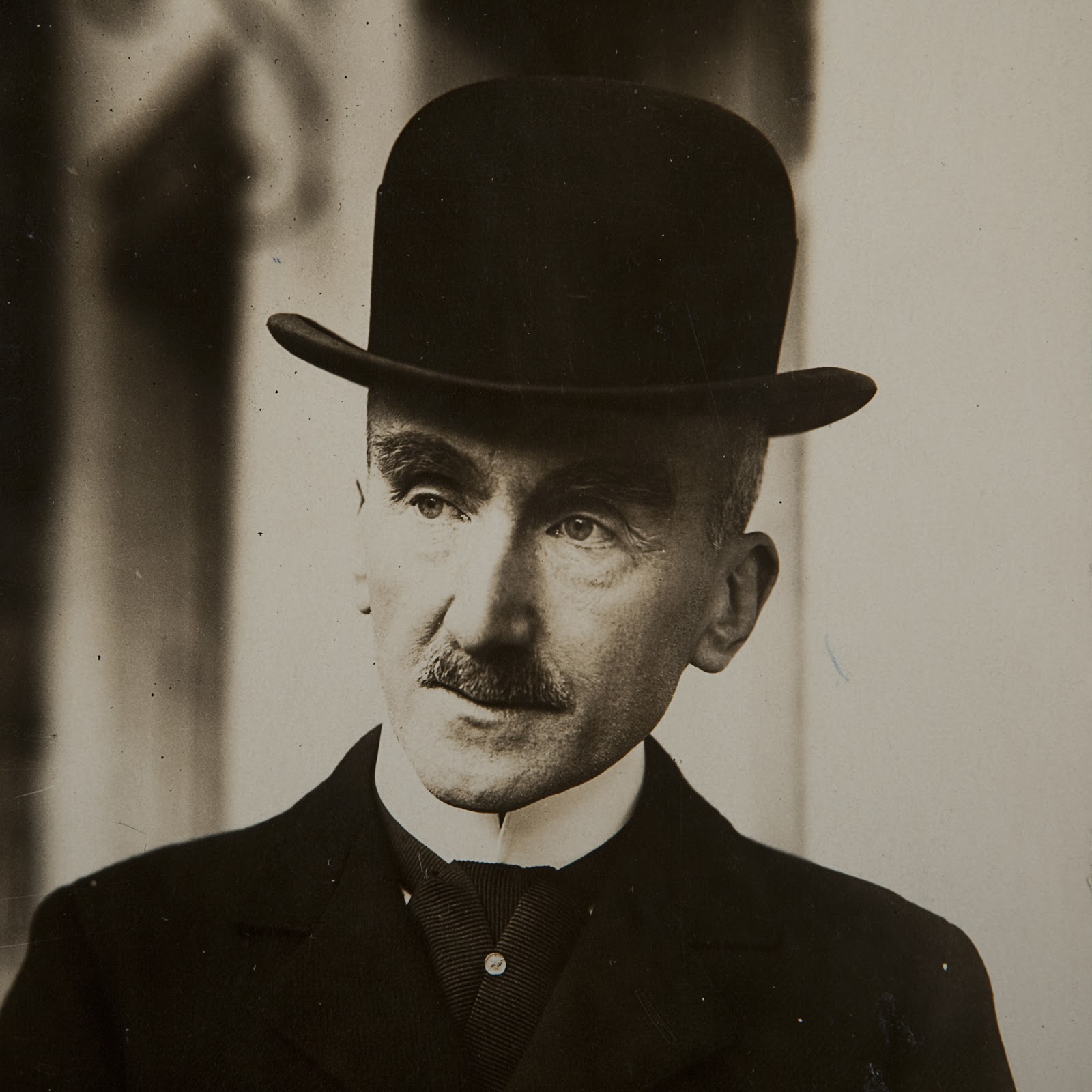
The link between humour and cohesion was first noted by the French philosopher, Henri Bergson, who observed that laughter (and wit and humour) has a social function, serving to integrate us in a social group; the fact that "I laugh because other members of my group are laughing" makes me part of it. And, in laughing together, we share a common view of the world. Konrad Lorenz, the pioneering observer of animal behaviour, also referred to the bonding that laughter, the overt expression of humour, generates. What evolves is a feeling of fellowship. The person feels an insider. I alluded to my own sense of belonging to the Jewish community when growing up in racist South Africa. Although we were not direct victims of anti-Semitism, we constituted a phenomenally cohesive group in the face of a moral vacuum.
In facing threats and perils throughout their history, Jews have had to rally together, forging strong ties. Jewish life has always had this character — a sense of connectedness. Indeed, a prominent Jewish philosopher, Asher Ginsberg, who assumed the Hebrew name Achad Ha'am (literally "one of the people"), suggested that cohesiveness was paramount in Jewish experience. Certainly, in Eastern Europe, the sense of community was paramount. A thread of many Jewish jokes has been participation in the lives of fellow Jews. The traditional marriage broker illustrates this perfectly; it should come as no surprise (as you will see in the compilation) that so many Jewish jokes involve this key social figure.

With our journey nearing its end, I hope you will better appreciate the types of joke I have selected. But first I must emphasize that I have rejected any humour that could offend or belittle. Here, I follow in the tradition of Jewish scholars who, as I mentioned earlier, were forbidden to allow malevolence to tarnish their fables, parables, and anecdotes.
In a more positive sense, I have favoured jokes that are philosophically "clever", and which illuminate the nature of Jewish experience. I commented earlier that my principal method of collecting them has been to elicit jokes directly from people who value Jewish humour as an inherent and enriching feature of their lives.
I hope that Jewish readers will gain pleasure in encountering our priceless heritage. As I highlighted earlier, the compilation embodies not only our ancestors' brilliant sense of humour but also their wisdom in tackling, head on, the vicissitudes of Jewish life.
My second hope centres on bringing Jewish humour to life. Jokes must be told. I invite you, whether you are Jewish or non-Jewish, to share your favourites with family and friends. Avner Ziv, who I cited earlier, gave me sound advice when I lamented that I was a hopeless at telling jokes, customarily stumbling at every turn and botching the punchline. I resigned myself to the role of listener. But Professor Avner emboldened me to develop a personal joke book, train myself to incorporate Jewish humour into my life by "working" on jokes that appeal to me and to cultivate my own way to express them. I have attempted to follow the advice he gave me all those years ago. Although I still struggle to relate a joke confidently, my amateurish efforts seem to be appreciated. One little tip — the more often you tell your favourite joke, the better the result. You can even enhance its effects by incorporating your own embellishments.
My third hope is, in effect, an extension of the previous one — to weave humour into Jewish family and Jewish community life, among them, speeches on festive occasions in bar and bat mitzvas, weddings, anniversaries, even consecrations. We will agree, I am sure, that a well-chosen joke is often the feature of a speech we readily recall, even years later.
My final hope is addressed to Jewish and non-Jewish readers alike. At a time when prejudice, discrimination and intolerance are so prevalent, we need every means to promote accord between religions, races and ethnic groups. Humour, shorn of all nastiness, can contribute to building bridges of understanding and fellowship. I can only hope that Laughing Jewishly will help, even a little, to promote connectedness, kindness and harmony between peoples, no matter how diverse they are.
— Professor Sidney Bloch, Melbourne